
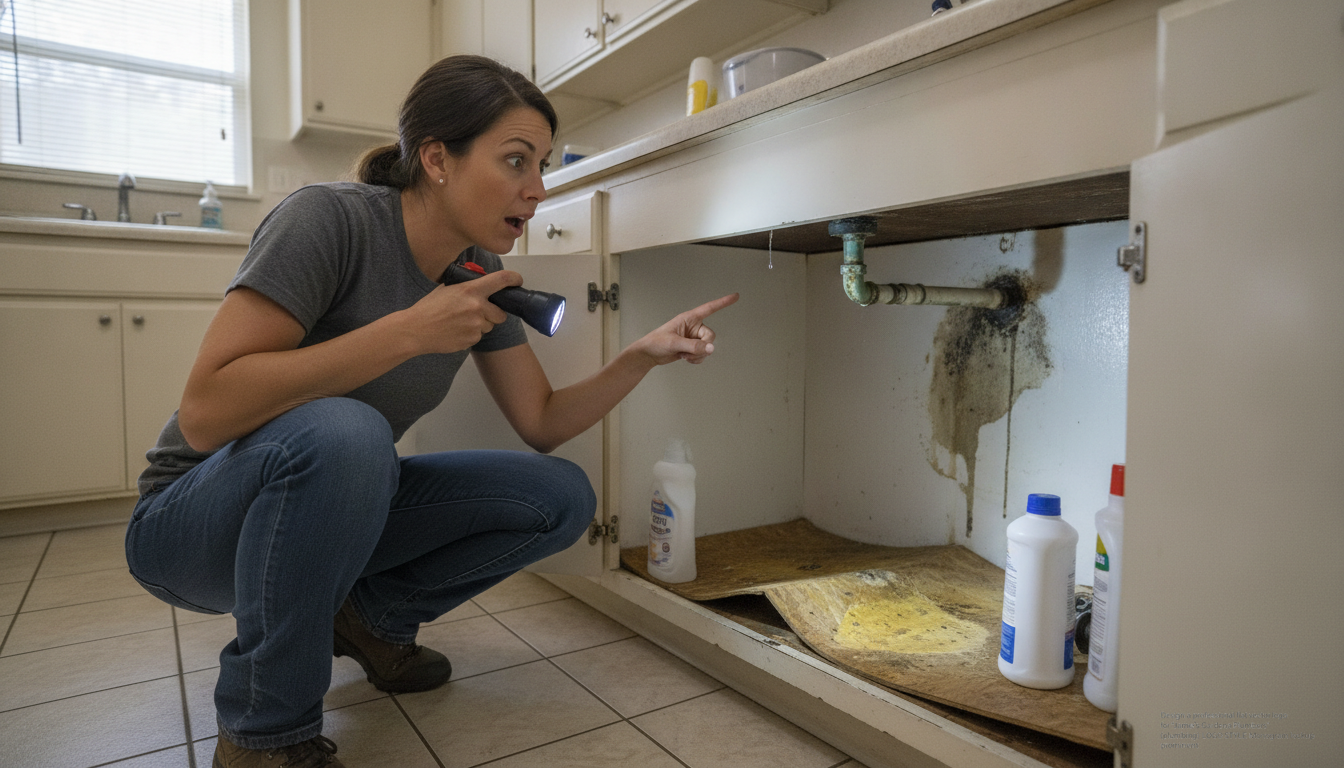
The Hidden Leak Problem Gardena Homeowners Face
Water leaks that you can see are inconvenient. Water leaks you can't see are dangerous. A pinhole leak in a copper supply pipe hidden behind drywall, or a slow crack in a slab-embedded drain line, can run undetected for weeks or months—quietly saturating insulation, rotting wood framing, fostering mold growth, and driving up your monthly water bill. By the time visible damage appears, the remediation cost can be ten times what it would have been if the leak had been caught early.
At James's Gardena Plumbers, our leak detection and repair service uses acoustic listening devices and electronic moisture meters to locate hidden leaks precisely—without tearing open walls or floors unnecessarily. Here's what every Gardena homeowner should know about identifying a hidden leak before it becomes a major problem.
Warning Sign #1: Your Water Bill Has Unexpectedly Increased
One of the earliest and most reliable indicators of a hidden leak is a spike in your monthly water bill that doesn't match your usage habits. If your bill has increased by 20% or more without any change in household routine—no extra guests, no new irrigation habits, no pool filling—there is a good chance water is escaping somewhere in your system.
To do a quick check, locate your water meter (typically near the curb in front of your home) and note the reading. Turn off every water-using appliance and fixture in the house—including ice makers and irrigation systems—and don't use any water for one to two hours. Check the meter again. If the reading has changed, water is moving through your system despite everything being off. That's a leak.
Gardena homeowners in the 90247, 90248, and 90249 zip codes served by our home service area can call us to confirm and locate the source of the leak.
Warning Sign #2: Warm, Damp, or Soft Spots on Your Floor
If you notice a section of flooring that feels warmer than the surrounding area—especially on a concrete slab floor—it may indicate a hot water supply line leak beneath the slab. This is known as a slab leak, and it is particularly common in Southern California homes built in the 1950s through 1980s with copper pipes that have thinned over time due to the region's soil chemistry and seismic movement.
Similarly, soft or spongy spots in wood subfloor, buckling laminate, or tiles that suddenly crack without any impact can indicate long-standing moisture intrusion from a drain line or supply line leak below. Don't ignore these physical changes in your flooring—they are structural red flags.
Warning Sign #3: Sounds of Running Water When Everything Is Off
Put your house in silence—turn off the TV, HVAC, and any appliances—and listen carefully. If you hear the sound of water moving, trickling, or hissing and you've confirmed all fixtures and appliances are off, that sound is likely coming from a pressurized pipe leak somewhere in your walls, under your floor, or underground.
This is exactly what our acoustic listening devices are designed to detect. By pressing the probe against walls, floors, and pipe access points, our technicians can hear abnormal water movement through solid surfaces and triangulate the leak location with a high degree of precision before any exploratory opening of walls occurs.
Warning Sign #4: Mold, Mildew, or Musty Odors Inside Your Home
Mold requires moisture and organic material to grow. If you detect a persistent musty or earthy odor inside a room—particularly in a bathroom, kitchen, or along an exterior wall—and there's no obvious source like a wet towel or humidity from an uncovered shower, the moisture is likely coming from inside the wall.
Mold can begin colonizing wet drywall within 24 to 48 hours of water exposure. Once it's established inside a wall cavity, remediation becomes a separate and costly process on top of the plumbing repair. Early leak detection dramatically reduces the likelihood of needing full mold remediation. If you live near Compton or Lawndale and notice these signs, our team can reach you quickly for an inspection.
Warning Sign #5: Visible Staining on Walls or Ceilings
Yellow, brown, or rust-colored staining on drywall or ceiling material is a sign that water has been present long enough to leach minerals and organic material through the surface. By the time staining is visible on the outside of the wall or ceiling, the inside has already sustained significant saturation.
Water stains don't always appear directly above or beside the leak source—water follows the path of least resistance and can travel several feet along framing members before saturating an area visible from the interior. This is why professional leak detection equipment is so important: it allows us to trace the water back to the actual source rather than opening walls based on surface staining alone.
What Happens During a Professional Leak Detection Inspection?
When you call James's Gardena Plumbers for a leak detection appointment in Gardena, here's what to expect:
- Initial assessment: We review your symptoms, water bill history, and the age of your plumbing to build a picture of where the leak is most likely occurring.
- Non-invasive scanning: Using acoustic listening probes and electronic moisture meters, we scan walls, floors, and ceilings in the suspected area to identify abnormal moisture and sound signatures.
- Leak location confirmation: Once we've identified the most likely location, we perform a targeted investigation—opening only the section of wall or floor needed to access the pipe, rather than exploratory demolition across a large area.
- Repair and pressure testing: After repairing the leak—whether it's a section re-pipe, a copper patch, or a reroute around a slab leak—we conduct a pressure test to confirm the repair is complete and no additional failures exist in the same line.
- Documentation: We document our findings thoroughly, which can assist homeowners who need to file a water-damage insurance claim.
When a Leak Points to a Bigger Plumbing Problem
Sometimes a single detected leak is a symptom of a broader issue with aging pipes. Homes in Gardena built before 1980 with original galvanized steel supply lines are prone to corrosion that produces multiple pinhole leaks over time. If we find that your pipes are heavily corroded or have experienced multiple failures in a short period, we may recommend considering our whole-home repiping service to replace the aging system entirely with copper or PEX tubing.
Repiping eliminates the cycle of patching one leak only to have another appear down the line, and it restores full water pressure to every fixture in your home. We provide detailed, itemized estimates for repiping so you understand exactly what the investment includes before any work begins.
Don't Wait—Call James's Gardena Plumbers for Leak Detection
Hidden leaks don't repair themselves, and they don't stay hidden forever. The earlier you catch a leak, the lower the total cost of repair and remediation. James's Gardena Plumbers serves homeowners throughout Gardena, Hawthorne, Lawndale, Compton, and the broader South Bay area seven days a week, 8:00 AM to 6:00 PM.
If you've noticed any of the warning signs described above, call us at +1 (424) 999-0230 or email [email protected] to schedule a leak detection inspection. We'll find the source, give you a clear repair plan with upfront pricing, and fix the problem right the first time.